
Mehr Flexibilität und Funktionalität bei primären Eingriffen
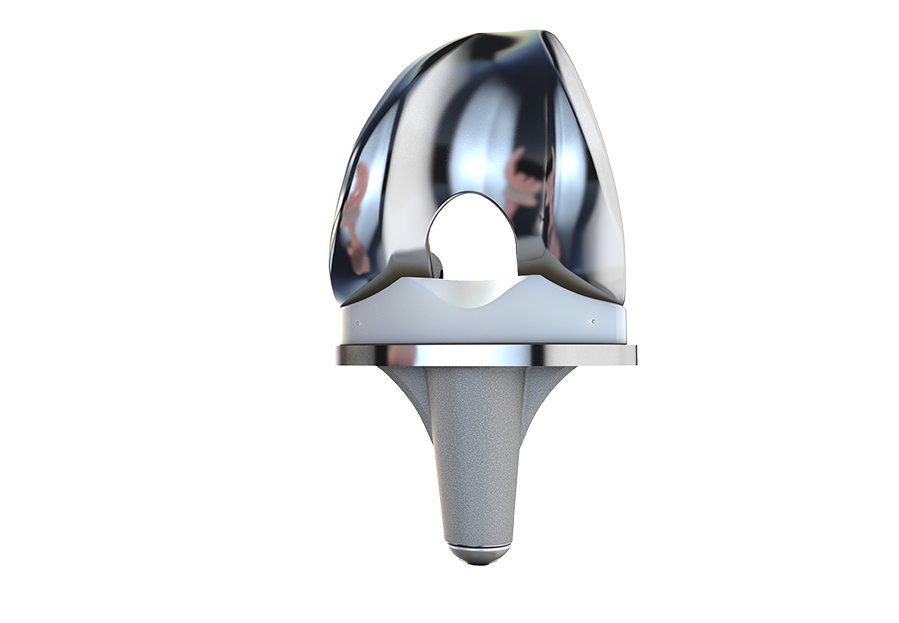
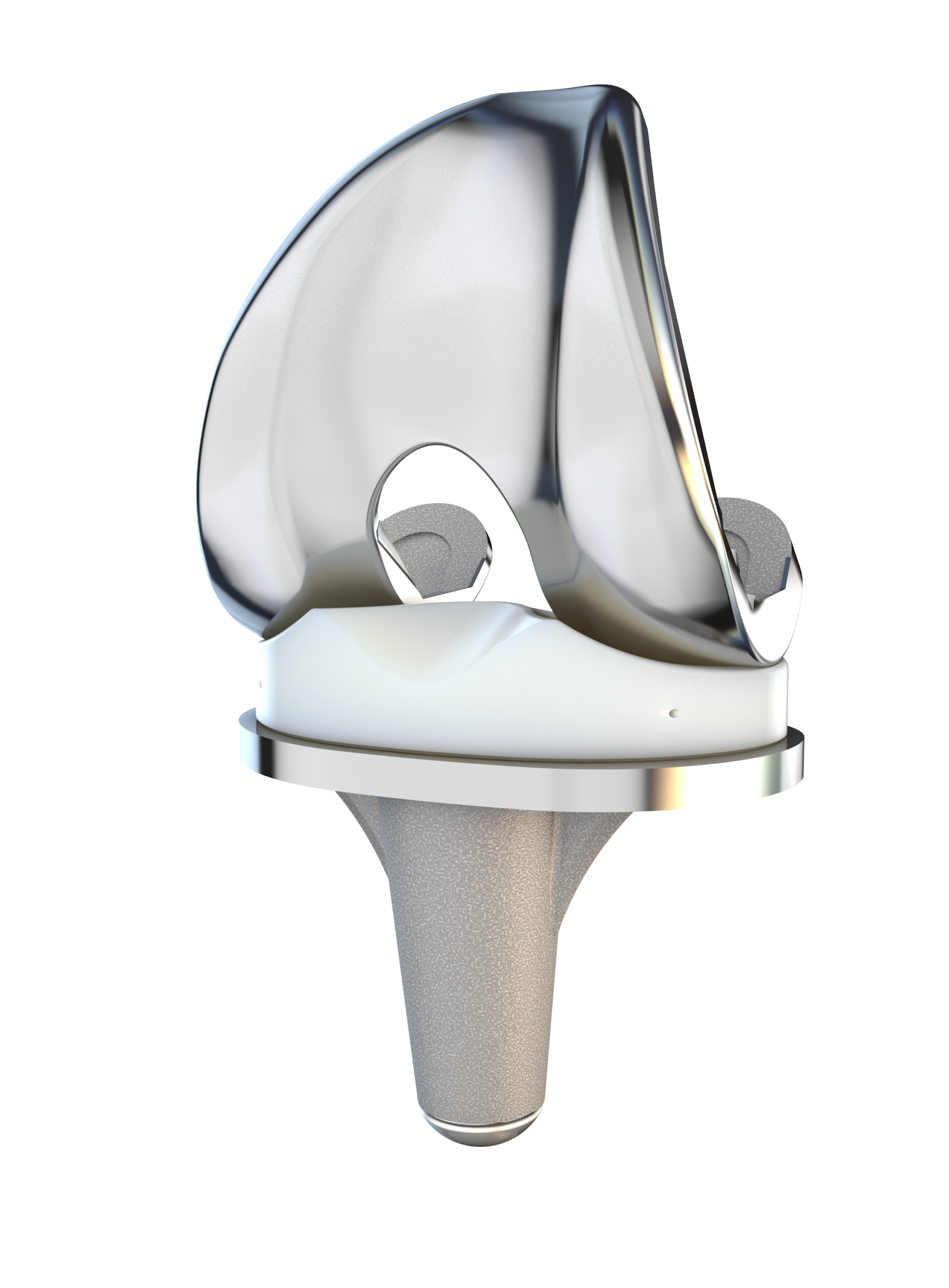
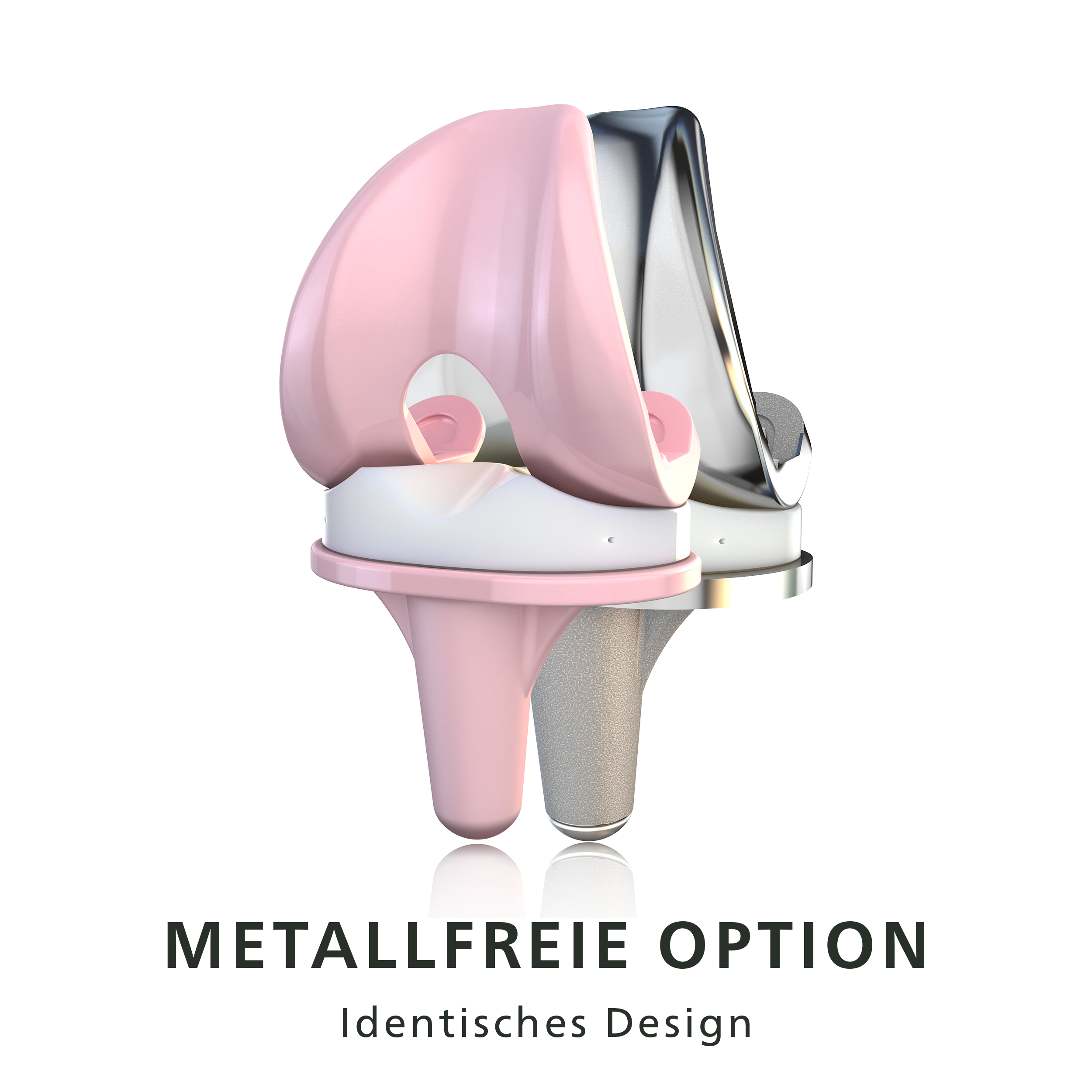
Das BPK-S Integration ist ein primäres Kniesystem mit hervorragendem Abriebverhalten, konsequentem Weichteilmanagement und optimierter Patellaführung, das den Herausforderungen der demographischen Entwicklung und dem verändertem Patientenverhalten geschlechterunabhängig1 gerecht wird. Bei primären Eingriffen steht für metallsensitive Patienten eine metallfreie Versorgungsoption aus BIOLOX delta Keramik zur Verfügung.
Darüber hinaus kann das primäre System intraoperativ zu jedem Zeitpunkt an die patientenindividuelle Weichteil- und Defektsituation durch einfachen Wechsel auf höhere Kopplungsgrade angepasst werden.
Intersystemische Kompatibiltät für Primär- und Revisionseingriffe
Die modulare Bauweise des BPK-S Integration Systems bietet dem Operateur die Option, die Versorgung flexibel an den Patienten anzupassen. Die einheitliche Schnittgeometrie und Außenkontur der Primär- und Revisionsimplantate gewährleistet eine weitgehend freie Kombination der Primär- und Revisionskomponenten und somit übergreifende Versorgungsmöglichkeiten. Die individuelle Herangehensweise bietet Vorteile für viele Patienten. Der Operateur kann exakt die Gelenkkomponenten verwenden, die optimal zur Anatomie des Patienten passen.
Die intraoperative Flexibilität, die Anpassungsfähigkeit an die patientenindividuelle Situation und die präzise Implantationstechnik machen das BPK-S Integration Kniesystem zu einer ausgezeichneten Wahl auch bei komplexen Eingriffen.
______________________
Material
- Zementierte Implantate: Co28Cr6Mo
- Zementfreie Implantate: Co28Cr6Mo + Titan Grad 4 (Titanium Rough Coated (TiRC)
- Inserts und Patella: UHMW-PE
______________________
Design & Funktion
Stabilität ohne Kompromiss durch komplementäre Eigenschaften im Gleitlager
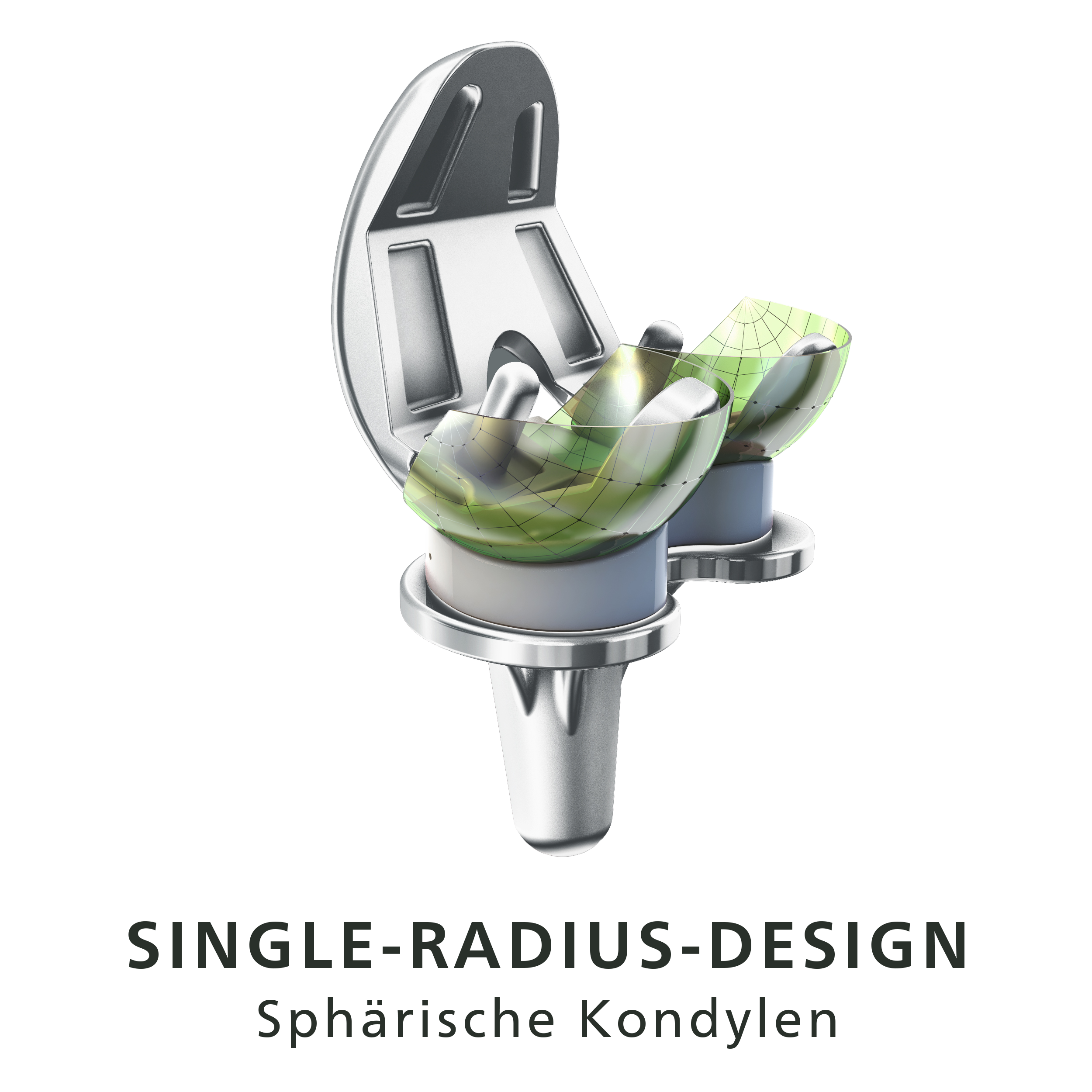
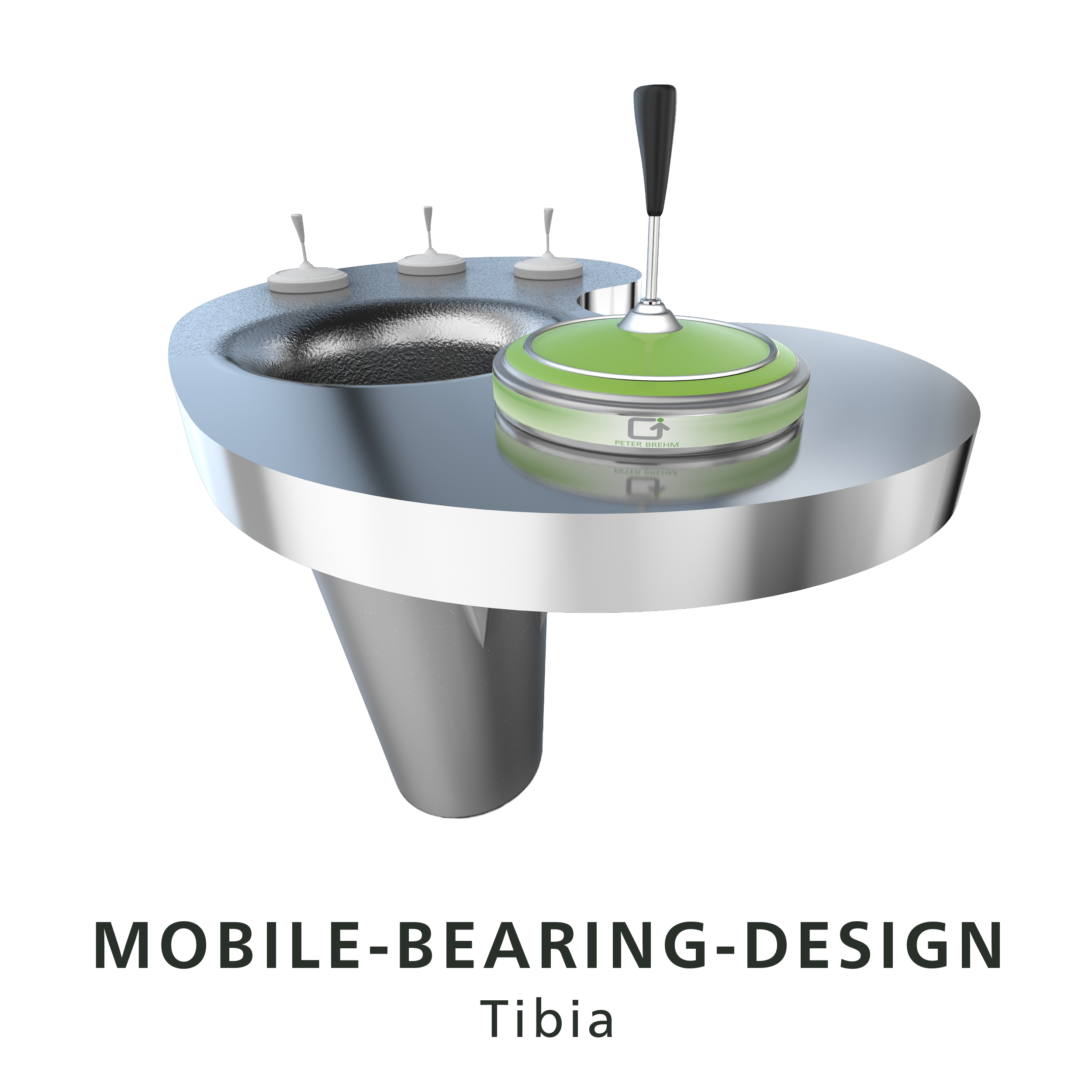
- Überlegene Gelenkfunktion durch die Kombination zweier Designmerkmale: SINGLE-RADIUS & MOBILE-BEARING
für STABILITÄT & MOBILITÄT
→ Hohe Gelenkstabilität ohne Einschränkung der Beweglichkeit
→ Erhöhter Komfort und Patientenzufriedenheit
→ verlängert die Lebensdauer des Implantats
Assoziierte Vorteile des SINGLE-RADIUS-Designs (sphärische Kondylen)
- Konstante Stabilität während der aktiven Bewegung in der Sagittal- und Koronalebene
- Reduzierter anteriorer Knieschmerz durch verbesserte Aktivität der Quadrizeps- und Hamstringmuskulatur
- Reduzierte Prävalenz für „Mid-Flex-Instability“
- Verbesserte Flexion / Extension („Range of Motion“)
- Verbesserte Funktionswerte, die auf höhere Patientenzufriedenheit, bessere Kniebeweglichkeit, Stabilität und Schmerzlinderung hindeuten
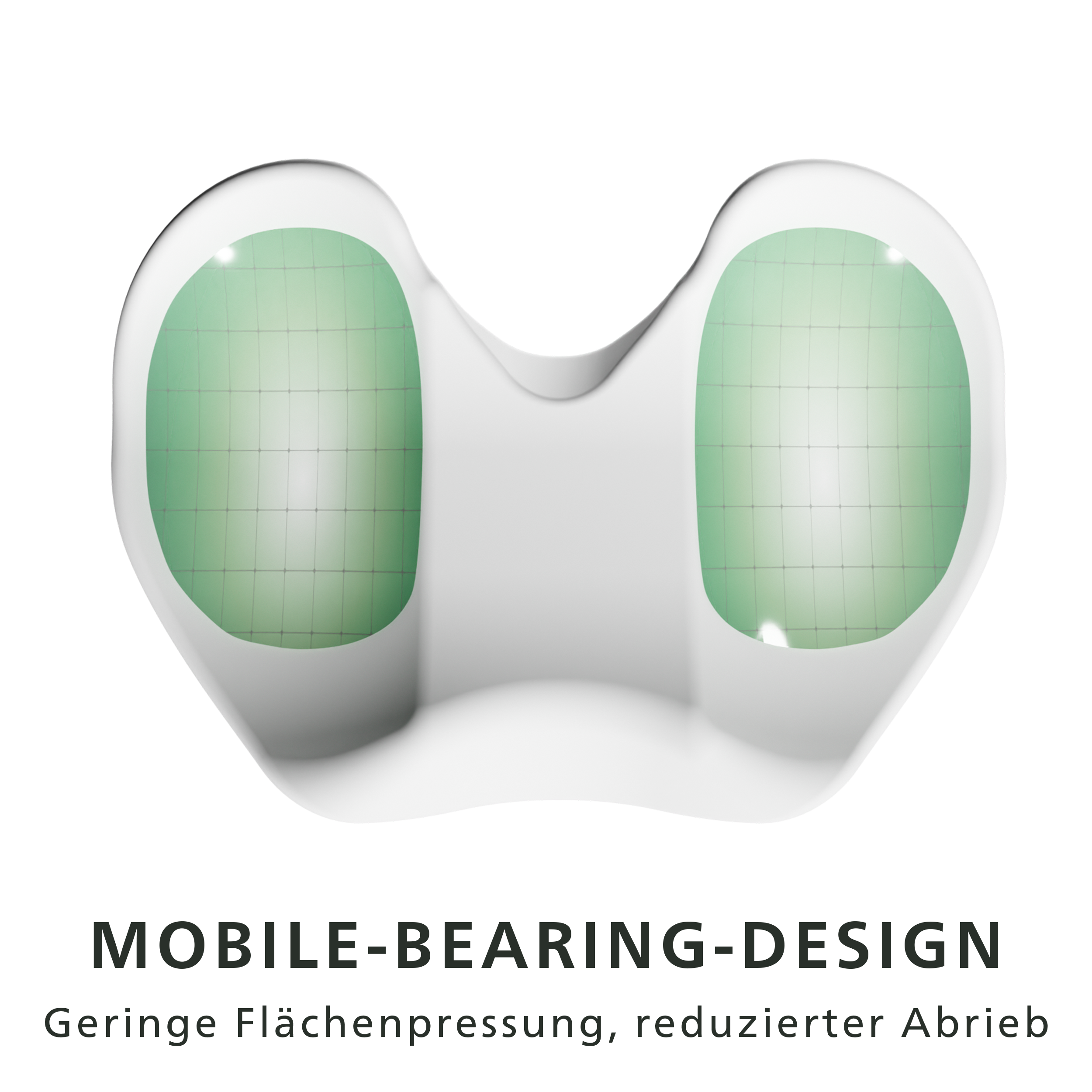
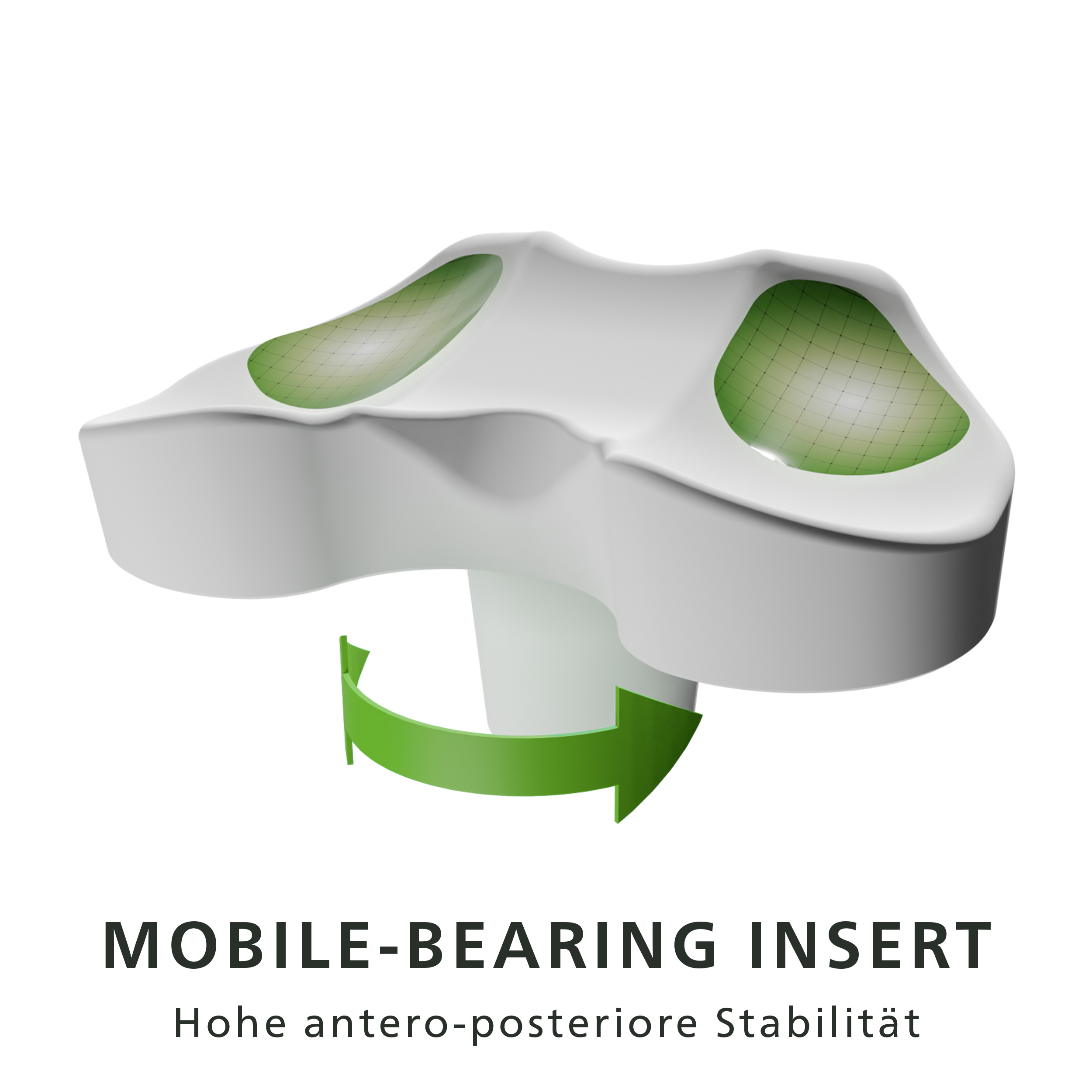
MOBILE-BEARING Design
- Trennung von Translation und Rotation
→ Umwandlung von multidirektionalen in unidirektionale Bewegungsmuster - Verbesserung der Verschleißfestigkeit durch große Kontaktflächen
→ geringe Flächenpressung, reduzierter Abrieb - Selbstausrichtung der tibio-femoralen Rotation – Zentrierung der femoralen Rotation zur Verbesserung der Patellaführung
- Entlastung im Gleitlager und der Schnittstelle zwischen Implantat und Knochen
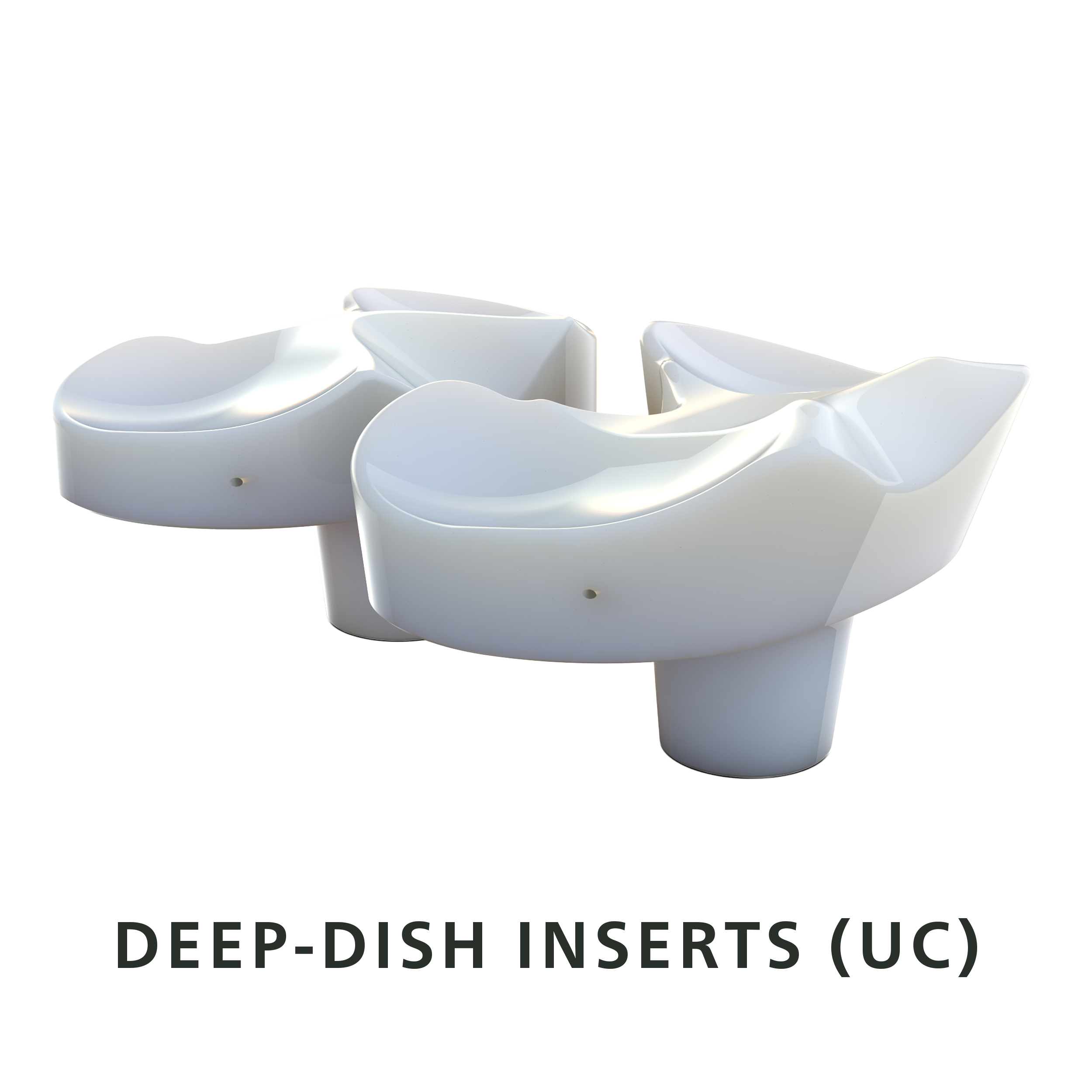
Hohe antero-posteriore Stabilität mit Deep-Dish Inserts (Ultra-Kongruentes Design)
- Keine Zwangsführung
- Keine Beschädigungen an den Führungsmechanismen (kein PS-Zapfen)
- Keine zusätzliche Knochenresektion für CAM/SPINE-Mechanismus
- Kein erhöhtes Risiko für „Patella-Clunk-Syndrom“
- Eine Femurkomponente für die Standard- und die antero-posteriore Stabilisierung
→ einfache Behandlung sekundärer antero-posteriorer Instabilitäten. - Geringere Häufigkeit für sekundären Patellaersatz
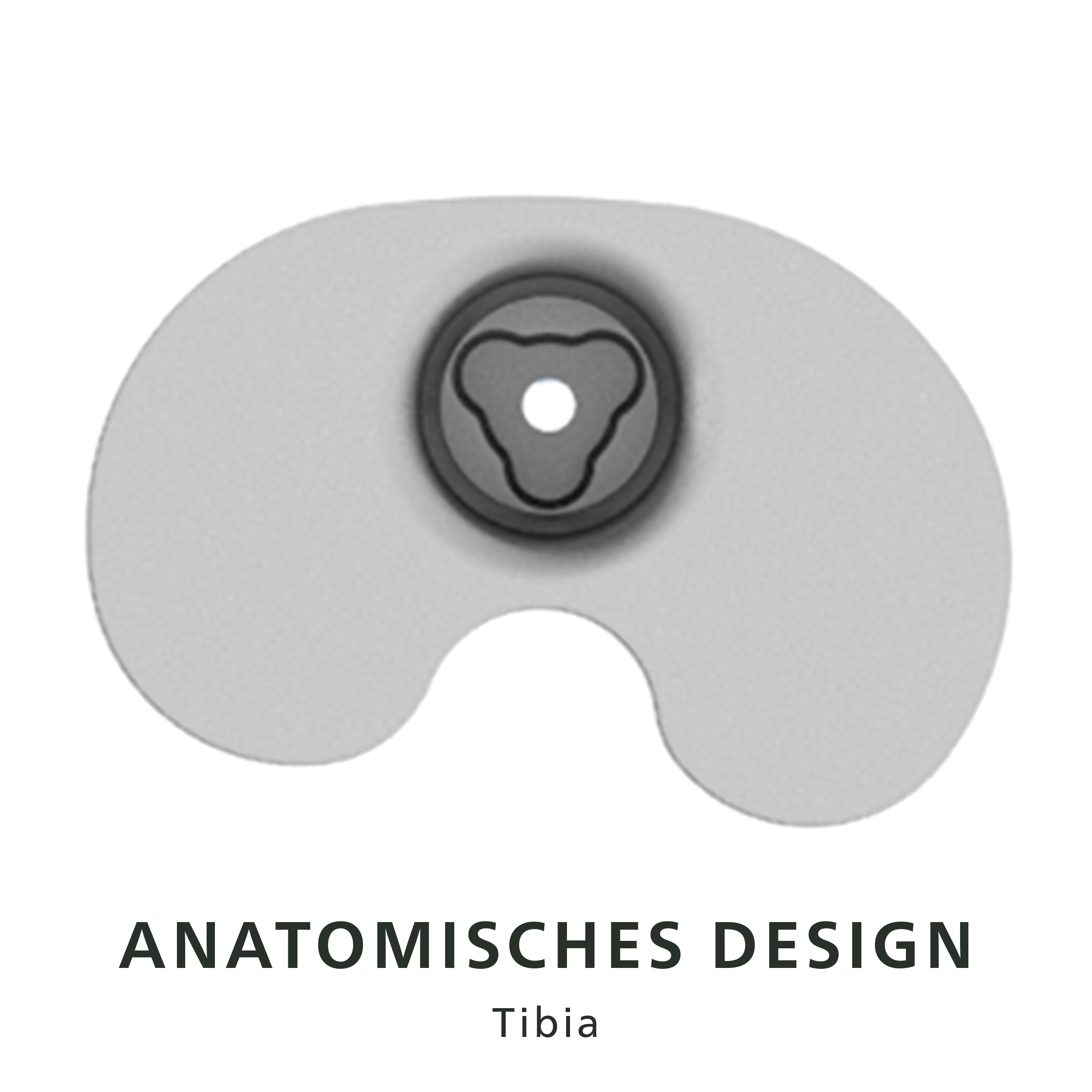
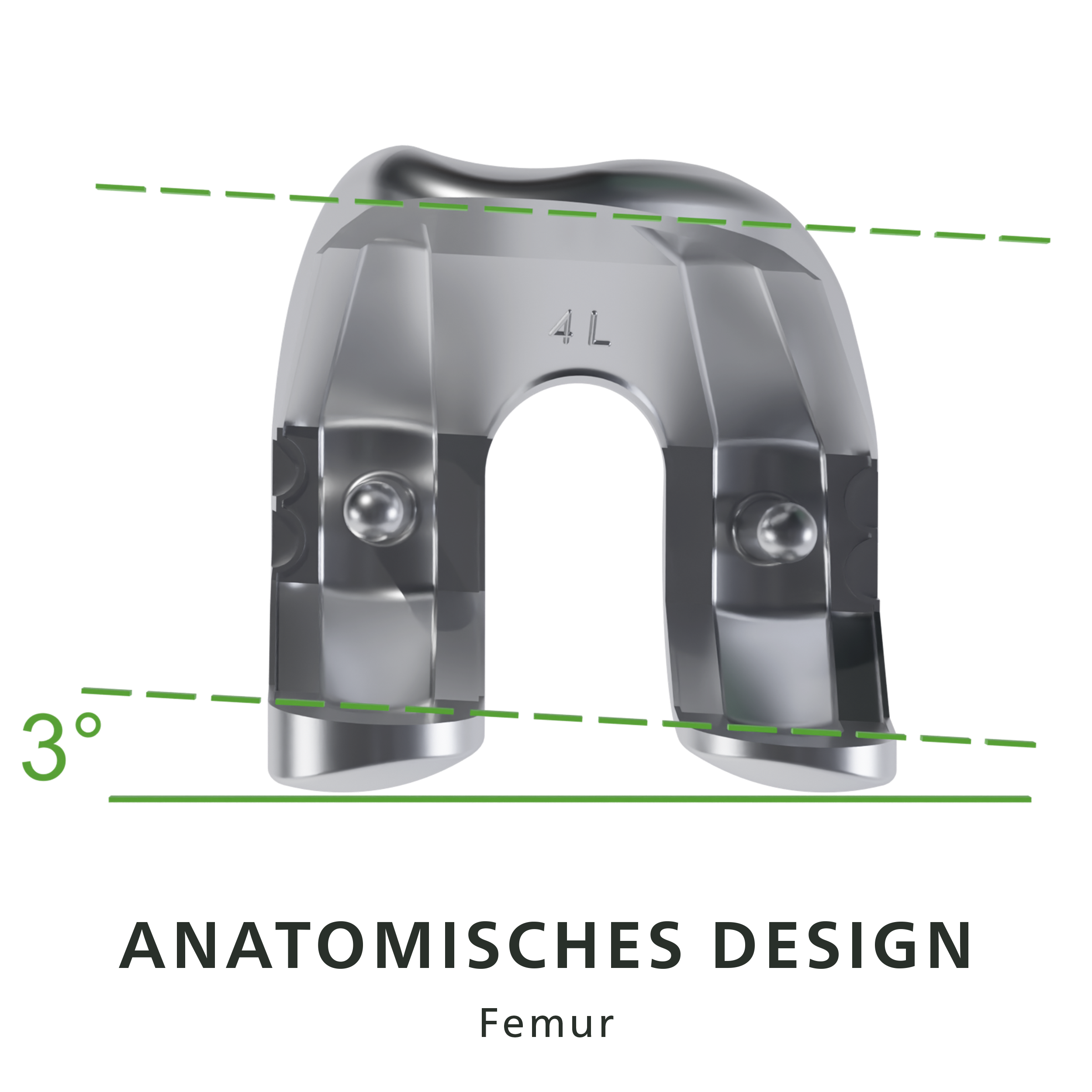
Anatomisches Design
Tibia-Implantate
- Verbesserte kortikale Abstützung zur Verhinderung von Implantatmigration und -lockerung
- Vermeidung von Weichteilimpingement
Femur-Implantate
- Vergrößerte anteriore Kontaktfläche zwischen Implantat und Knochen
- Erhalt der Knochenstrukturen
- Reduziertes Risiko für antero-laterales “Notching”
______________________
Vorteile
- Stabile und sichere Wiederherstellung der Gelenkkinematik
→ kein zusätzliches Risiko für „Patella Clunk“
→ sekundäre A/P-Instabilitäten können durch Insertwechsel versorgt werden - Präzise und effiziente OP-Technik
→ weichteilbasierte Instrumentation unter konstanter Kontrolle der Gelenkspaltmaße
→ präziser Ausgleich der Gelenkspaltmaße (Streck-/Beugespalt) vor der ersten Resektion
→ Verzicht auf zusätzlichen distalen Referenzschritt, kaum - Nachresektion
- Metallfreie Versorgungsoption BPK-S Integration Ceramic für metallsensitive Patienten
→ identisches geometrisches Design
______________________
Größen & Varianten
Downloads
Für die Instrumentationsanleitungen bitten wir Sie. sich zu registrieren. Sollten Sie noch kein registrierter Benutzer sein, so können Sie Ihre Login-Daten hier anfordern. Fallberichte und Executive Summaries erhalten Sie in der Mediathek.
BPK-S Integration
BPK-S Integration
BPK-S Integration
Literatur
- Amaro JT, Novaretti JV, Astur DC, Cavalcante ELB, Rodrigues Junior AG, Debieux P, Kaleka CC, Cohen M. Higher Axial Tibiofemoral Rotation and Functional Outcomes with Mobile-Bearing Compared with Fixed-Bearing Total Knee Arthroplasty at 1- but Not at 2-Year Follow-Up-A Randomized Clinical Trial. J Knee Surg. 2020;33(5):474-480.
- Bernasek T, Stahl J, Haidukewich G. Mobile-Bearing Versus Fixed-Bearing Total Knee Arthroplasty: Results with a Cruciate-Retaining Knee System. J Arthroplasty 2007;22(2):P312
- Breuer, R., Fiala, R., Hartenbach, F. et al. Long term follow-up of a completely metal free total knee endoprosthesis in comparison to an identical metal counterpart. Sci Rep 2024;14:20958. https://pubmed.ncbi.nlm.nih.gov/39251687/
- Breuer R, Fiala R, Trieb K, Rath B. Prospective Mid-Term Results of a Completely Metal-Free Ceramic Total Knee Endoprosthesis: A Concise Follow-Up of a Previous Report. J Arthroplasty 2021;36(9):3161-3167. https://pubmed.ncbi.nlm.nih.gov/34090690/
- Bottlang M, Erne OK, Lacatusu E, Sommers MB, Kessler O. A mobile-bearing knee prosthesis can reduce strain at the proximal tibia. Clin Orthop Relat Res. 2006;447:105-111.
- Collados-Maestre I, Lizaur-Utrilla A, Gonzalez-Navarro B, Miralles-Muñoz FA, Marco-Gomez L, Lopez-Prats FA, Gil-Guillen, V. Better functional outcome after single-radius TKA compared with multi-radius TKA. Knee Surg Sports Traumatol Arthrosc. 2017;25(11):3508-3514.
- Cook LE, Klika AK, Szubski CR, Rosneck J, Molloy R, Barsoum WK. Functional outcomes used to compare single radius and multiradius of curvature designs in total knee arthroplasty. J Knee Surg. 2012;25(3):249-253.
- Data on file, PETER BREHM GmbH
- Dennis DA, Komistek RD. Mobile-bearing total knee arthroplasty: design factors in minimizing wear. Clin Orthop Relat Res. 2006;452:70-77.
- D‘Lima DD, Poole C, Chadha H, Hermida JC, Mahar A, Colwell CW Jr. Quadriceps moment arm and quadriceps forces after total knee arthroplasty. Clin Orthop Relat Res. 2001;392:213-220.
- Eckhoff DG, Bach JM, Spitzer VM, Reinig KD, Bagur MM, Baldini TH, Flannery NM. Three-dimensional mechanics, kinematics, and morphology of the knee viewed in virtual reality. J Bone Joint Surg Am. 2005;87 Suppl 2:71-80.
- Engh GA, Zimmerman RL, Parks NL, Engh CA. Analysis of wear in retrieved mobile and fixed bearing knee inserts. J Arthroplasty 2009;24(6 Suppl):28-32.
- Ezechieli M, Dietzek J, Becher C, Ettinger M, Calliess T, Ostermeier S, Windhagen H. The influence of a single-radius-design on the knee stability. Technol Health Care. 2012;20(6):527-534.
- Fisher J, Jennings LM, Galvin AL, Jin ZM, Stone MH, Ingham E. 2009 Knee Society Presidential Guest Lecture: Polyethylene wear in total knees. Clin Orthop Relat Res. 2010;468(1):12-18. https://pubmed.ncbi.nlm.nih.gov/19669846/
- Fisher J, McEwen H, Tipper J, Jennings L, Farrar R, Stone M, Ingham E. Wear-simulation analysis of rotating-platform mobile-bearing knees. Orthopedics. 2006;29(9 Suppl):S36-41.
- Gómez-Barrena E, Fernandez-García C, Fernandez-Bravo A, Cutillas-Ruiz R, Bermejo-Fernandez G. Functional performance with a single-radius femoral design total knee arthroplasty. Clin Orthop Relat Res. 2010;468(5):1214-1220. https://pubmed.ncbi.nlm.nih.gov/20012237/
- Hamilton DF, Burnett R, Patton JT, Howie CR, Moran M, Simpson AH, Gaston P. Implant design influences patient outcome after total knee arthroplasty: a prospective double-blind randomised controlled trial. Bone Joint J. 2015;97-B(1):64-70. https://pubmed.ncbi.nlm.nih.gov/25568415/
- Holthof SR, Rock M, van Arkel R, Brivio A, Barrett D, Amis AA. Evaluation of a novel robotic testing method for stability and kinematics of total knee arthroplasty. Knee Surg Sports Traumatol Arthrosc. 2025;33(4):1387-1396. https://pubmed.ncbi.nlm.nih.gov/39445624/
- Larsen B, Jacofsky MC, Jacofsky DJ. Quantitative, Comparative Assessment of Gait Between Single-Radius and Multi-Radius Total Knee Arthroplasty Designs. J Arthroplasty. 2015;30(6):1062-1067.
- Lee WC, Bin Abd Razak HR, Allen JC, Chong HC, Tan HCA. Achieving Minimum Clinically Important Difference in Oxford Knee Score and Short Form-36 Physical Component Summary Is Less Likely with Single-Radius Compared with Multiradius Total Knee Arthroplasty in Asians. J Knee Surg. 2019;32(3):227-232.
- Li M, Zhang L, Zhang R, Ma Y, Liao J, Li Q, Deng Z, Zheng Q. Better quadriceps and hamstring strength is achieved after Total knee Arthroplasty with single radius femoral prostheses: a retrospective study based on isokinetic and isometric data. Arthroplasty. 2020;2(1):5. https://pubmed.ncbi.nlm.nih.gov/35236469/
- Luo Z, Luo Z, Wang H, Xiao Q, Pei F, Zhou Z. Long-term results of total knee arthroplasty with single-radius versus multiradius posterior-stabilized prostheses. J Orthop Surg Res. 2019; 14(1):139. https://pubmed.ncbi.nlm.nih.gov/31097037/
- Luo Z, Zhou K, Wang H, Pei F, Zhou Z. Comparison between Mid-Term Results of Total Knee Arthroplasty with Single-Radius versus Multiple-Radii Posterior-Stabilized Prostheses. J Knee Surg. 2022;35(2):204-214.
- Mahoney OM, McClung CD, dela Rosa MA, Schmalzried TP. The effect of total knee arthroplasty design on extensor mechanism function. J Arthroplasty. 2002;17(4):416-421.
- McEwen HM, Barnett PI, Bell CJ, Farrar R, Auger DD, Stone MH, Fisher J. The influence of design, materials and kinematics on the in vitro wear of total knee replacements. J Biomech. 2005;38(2):357-365.
- Malinzak RA, Small SR, Rogge RD, Archer DB, Oja JW, Berend ME, Ritter MA. The effect of rotating platform TKA on strain distribution and torque transmission on the proximal tibia. J Arthroplasty. 2014;29(3):541-547.
- Meier E, Gelse K, Trieb K, et al. First clinical study of a novel complete metal-free ceramic total knee replacement system. J Orthop Surg Res. 2016;11:21. https://pubmed.ncbi.nlm.nih.gov/26857704/
- Ostermeier S, Stukenborg-Colsman C. Quadriceps force after TKA with femoral single radius. Acta Orthop. 2011;82(3):339-343. https://pubmed.ncbi.nlm.nih.gov/21504308/
- Ranawat CS, Komistek RD, Rodriguez JA, Dennis DA, Anderle M. In vivo kinematics for fixed and mobile-bearing posterior stabilized knee prostheses. Clin Orthop Relat Res. 2004;(418):184-190.
- Rees JL, Beard DJ, Price AJ, Gill HS, McLardy-Smith P, Dodd CA, Murray DW. Real in vivo kinematic differences between mobile-bearing and fixed-bearing total knee arthroplasties. Clin Orthop Relat Res. 2005;(432):204-209.
- Sawaguchi N, Majima T, Ishigaki T, Mori N, Terashima T, Minami A. Mobile-bearing total knee arthroplasty improves patellar tracking and patellofemoral contact stress: in vivo measurements in the same patients. J Arthroplasty. 2010;25(6):920-925.
- Stiehl JB. Comparison of tibial rotation in fixed and mobile bearing total knee arthroplasty using computer navigation. Int Orthop. 2009;33(3):679-685. https://pubmed.ncbi.nlm.nih.gov/18618114/
- Sumner B, McCamley JD, Jacofsky DJ, Jacofsky MC. Comparison of Knee Kinematics and Kinetics during Stair Ascent in Single-Radius and Multiradius Total Knee Arthroplasty. J Knee Surg. 2019;32(9):872-878.
- Thomas P, Roider G, Beraudi A, et al. Metal Implant Allergy and Immuno-Allergological Compatibility Aspects of Ceramic Materials. Springer-Verlag Berlin Heidelberg 2015.
- Trieb K, Ullmann D. Metzinger K, et al. Prospective Comparison of a Metal-Free Ceramic Total Knee Arthroplasty with an identical Metal system. Z Orthop. 2018;156:46-52. https://doi.org/10.1055/s-0043-118600
- Wang H, Simpson KJ, Ferrara MS, Chamnongkich S, Kinsey T, Mahoney OM. Biomechanical differences exhibited during sit-to-stand between total knee arthroplasty designs of varying radii. J Arthroplasty. 2006;21(8):1193-1199.
- Yang CC, McFadden LA, Dennis DA, Kim RH, Sharma A. Lateral retinacular release rates in mobile- versus fixed-bearing TKA. Clin Orthop Relat Res. 2008;466(11):2656-2661. https://pubmed.ncbi.nlm.nih.gov/18709430/
- Muenzberg M, Stretz C, Baur W, Stangl R, Merschin D. Gender influence on the outcome of an unisex total knee arthroplasty system. Technol Health Care. 2014;22(1):129-136 https://pubmed.ncbi.nlm.gov/24361984/