
Goldstandard
Erfolgreich seit 1993
Die seit mehr als 3 Jahrzehnten bewährte modulare Revisionsprothese MRP-TITAN® wurde entwickelt, um den Anforderungen an die Revisionschirurgie gerecht zu werden. Die Prothese bietet dem Operateur die hohe intraoperative Flexibilität, Zuverlässigkeit und reproduzierbare Operationstechnik, die für eine Revisionsoperation unabdingbar sind.
Primäre Versorgungsoption
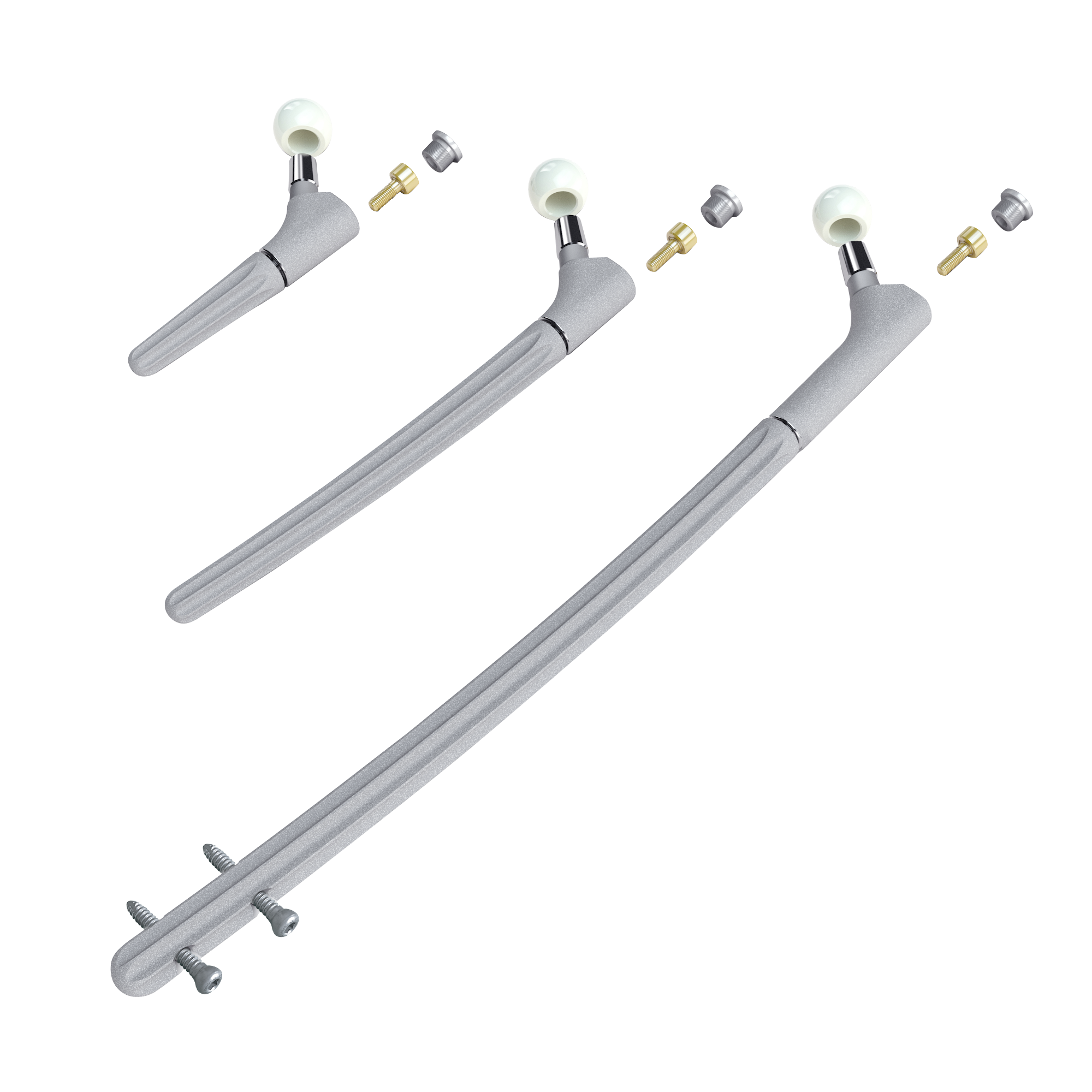
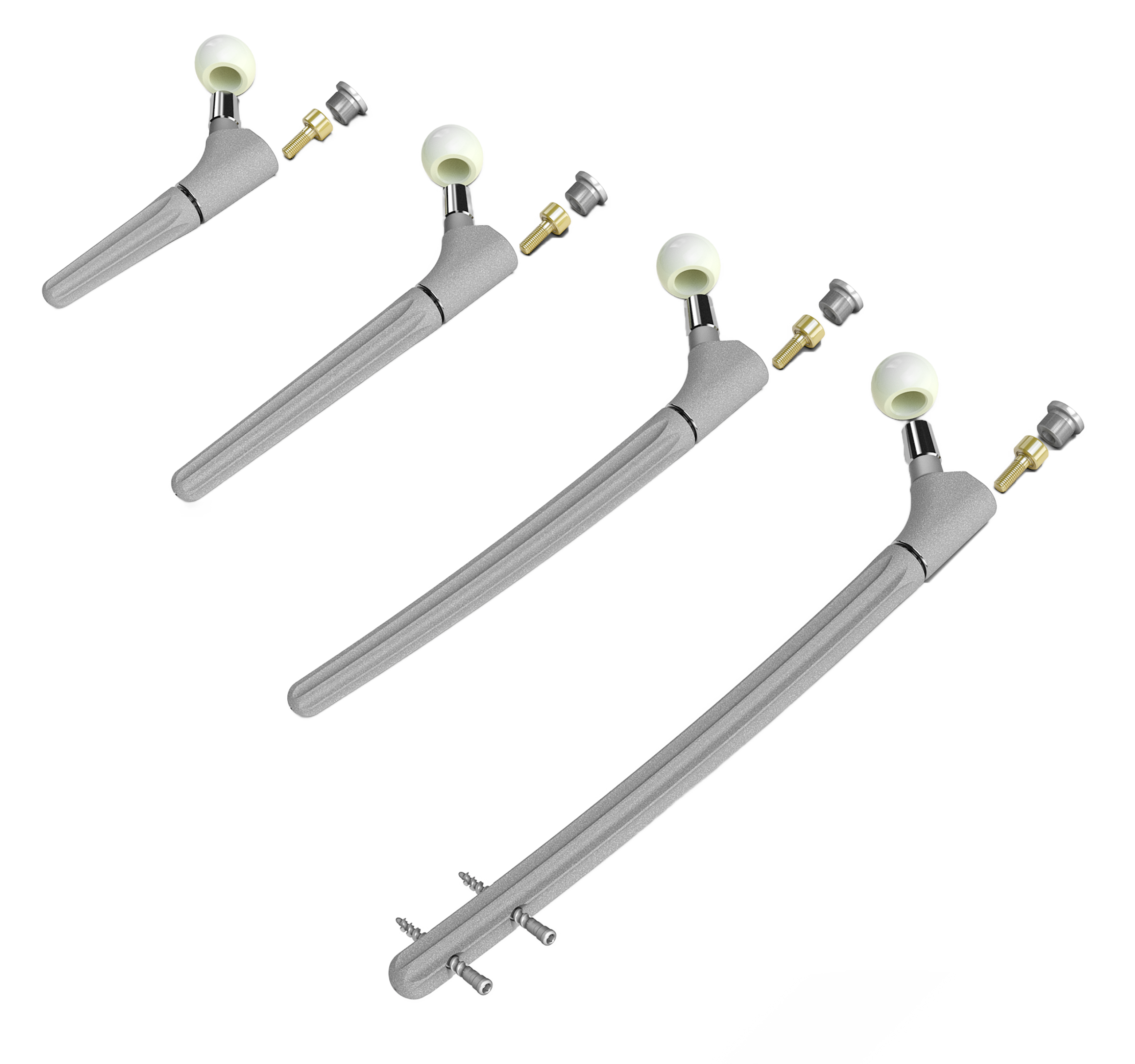
Die MRP-TITAN® Schäfte gerade Länge 80 mm können für primäre Indikationen verwendet werden.
Klinisch bewährt
Daten im mittel- und langfristigen Verlauf und die langjährige klinische Anwendung belegen die hervorragende Effizienz der modularen Revisionsprothese MRP-TITAN, mit Überlebensraten von 97% nach 10 Jahren und 85% nach 15 Jahren. Eine beträchtliche Anzahl von Patienten konnte ihre Mobilität und Lebensqualität wiedererlangen.3,4,9,10,11,12,14,15,17
Implantatwahl im System für bestmögliche Ergebnisse
Für die optimale Rekonstruktion empfehlen wir bei der Auswahl der Komponenten innerhalb unserer angebotenen Prothesensysteme zu wählen. Die Produkte sind optimal aufeinander abgestimmt.
Die MRP-TITAN® bietet insbesondere in Verbindung mit den modularen Revisionspfannen MRS-TITAN® Comfort und MRS-TITAN® Standard/Maximum eine Vielzahl von Optionen für patientenindividuelle Lösungen der verschiedensten anatomischen Anforderungen und anspruchsvollen Defektsituationen in der Hüftrevision.
Material
- Bewährte biokompatible Titanlegierung Ti6Al4V
- Konsequenter Verzicht auf kennzeichnungspflichtige CMR-Stoffe (carcinogen, mutagen, reproduktionstoxisch)
- Kein Knochenzement
→ kein Risiko für Allergie auf Knochenzementbestandteile
Design & Funktion
- Zementfreie Verankerung
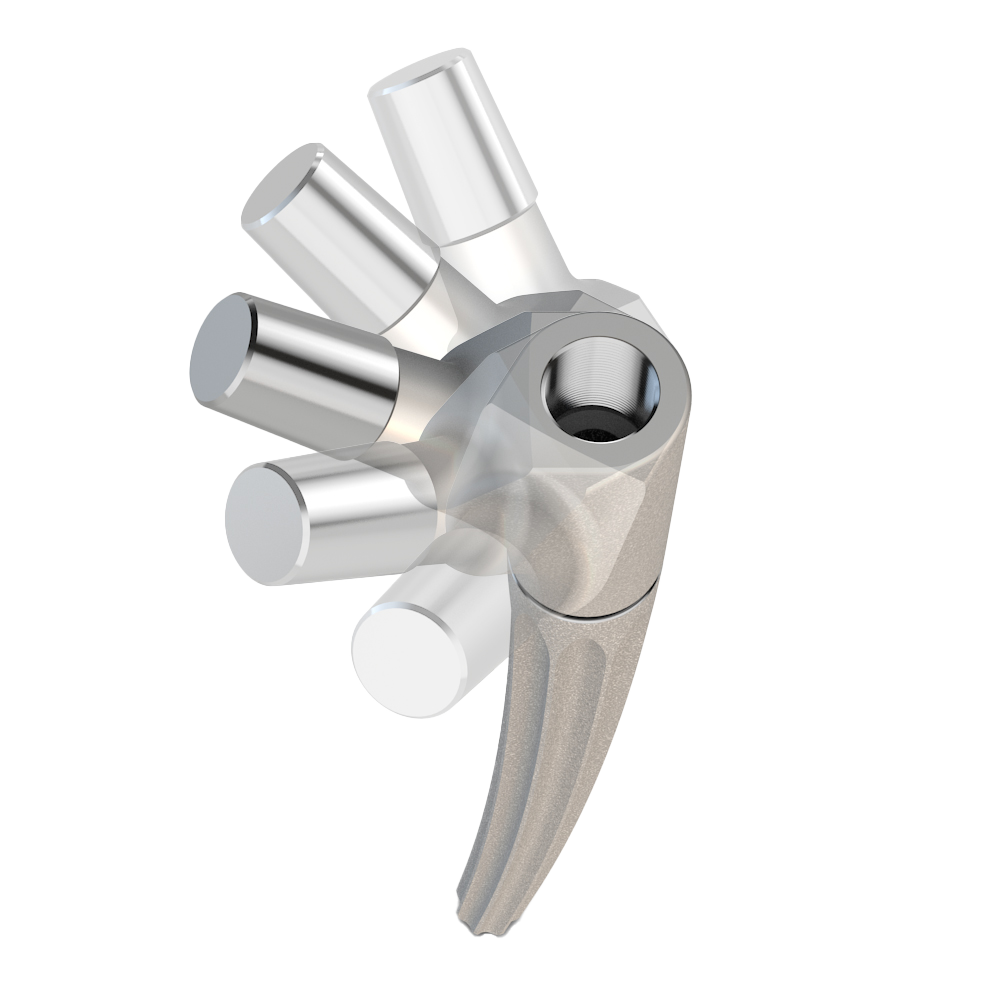
- Patentierte Konus-Steck-Verbindung
→ stufenlose Einstellung des Antetorsionswinkels über 360°
→ optimale Platzierung des Schafts
- Parabelförmige Schaftrippen
→ hohe Primärstabilität
→ Erhaltung der spongiösen Knochenstrukturen und Gefäße
→ solide großflächige Osseointegration
- Identische Schaftgeometrie
→ verlässlicher Wechsel von Probe- auf Originalschaft-Durchmesser
- Intra – postoperative Korrekturmöglichkeiten der Beinlänge und Antersion
Vorteile
- Optimale intraoperative Anpassungsfähigkeit an die individuellen Verhältnisse
→ Stufenlose Einstellung der Antetorsion
→ Optimale Beinlängenanpassung
- Kurvierte Schäfte ab 250 mm Gesamtlänge
→ „Kurvation an der richtigen Stelle“
→ vermindertes Risiko für Fissuren
- Hervorragende Osseointegration
- Hohe Anwenderfreundlichkeit
→ intra-/postoperative Trennbarkeit der Probe- und
Originalimplantate
→ intra-/postoperative Korrekturmöglichkeit von Implantatlänge
und Antetorsionswinkel
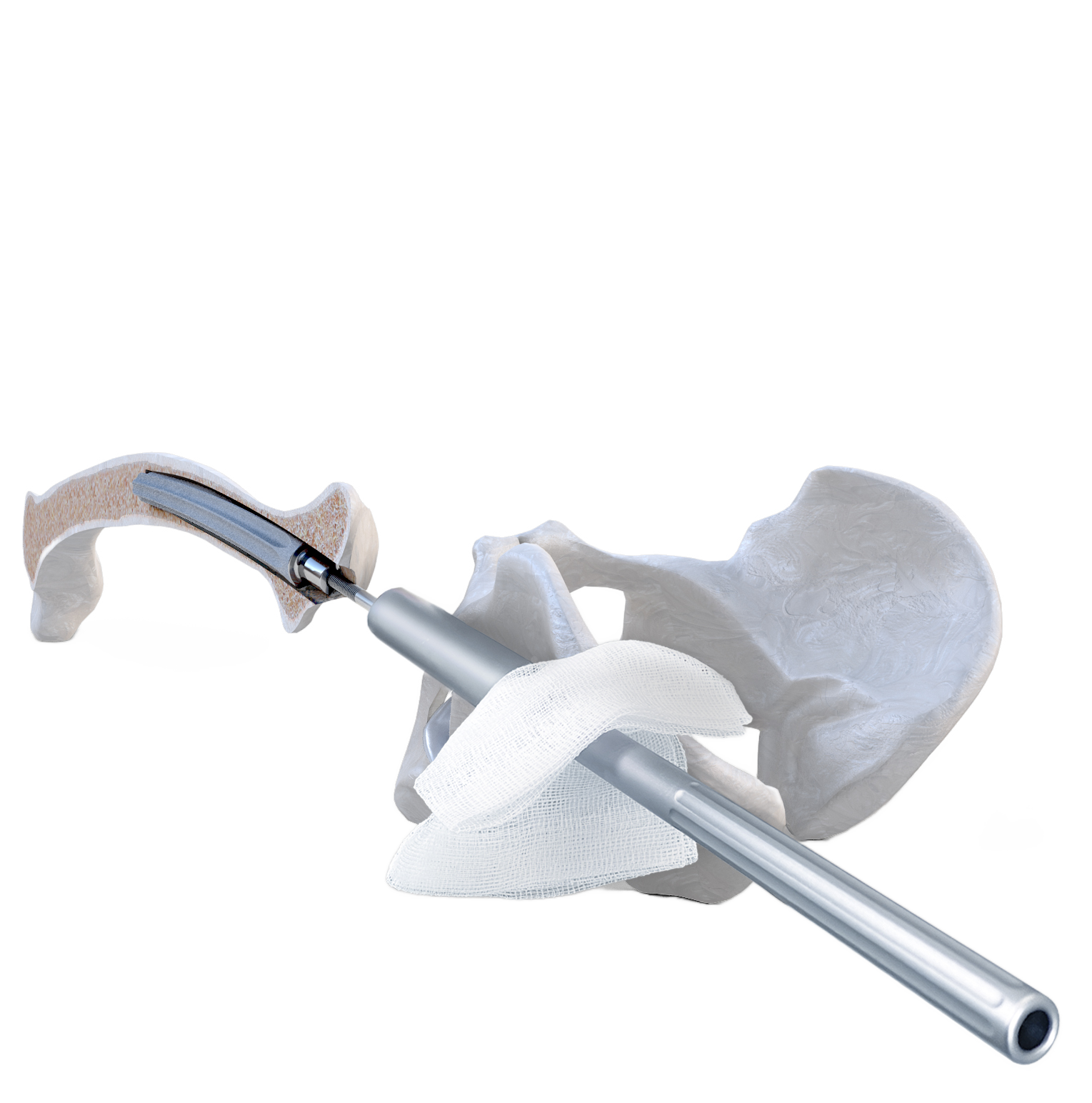
- Taper Wiper zur Erhöhung der Anwendungssicherheit
- Einfache und sichere Instrumentation
- Das erste und einzige Revisionssystem mit reproduzierbarer Reinigung und Fügung der modularen Steck-Konus-Verbindung
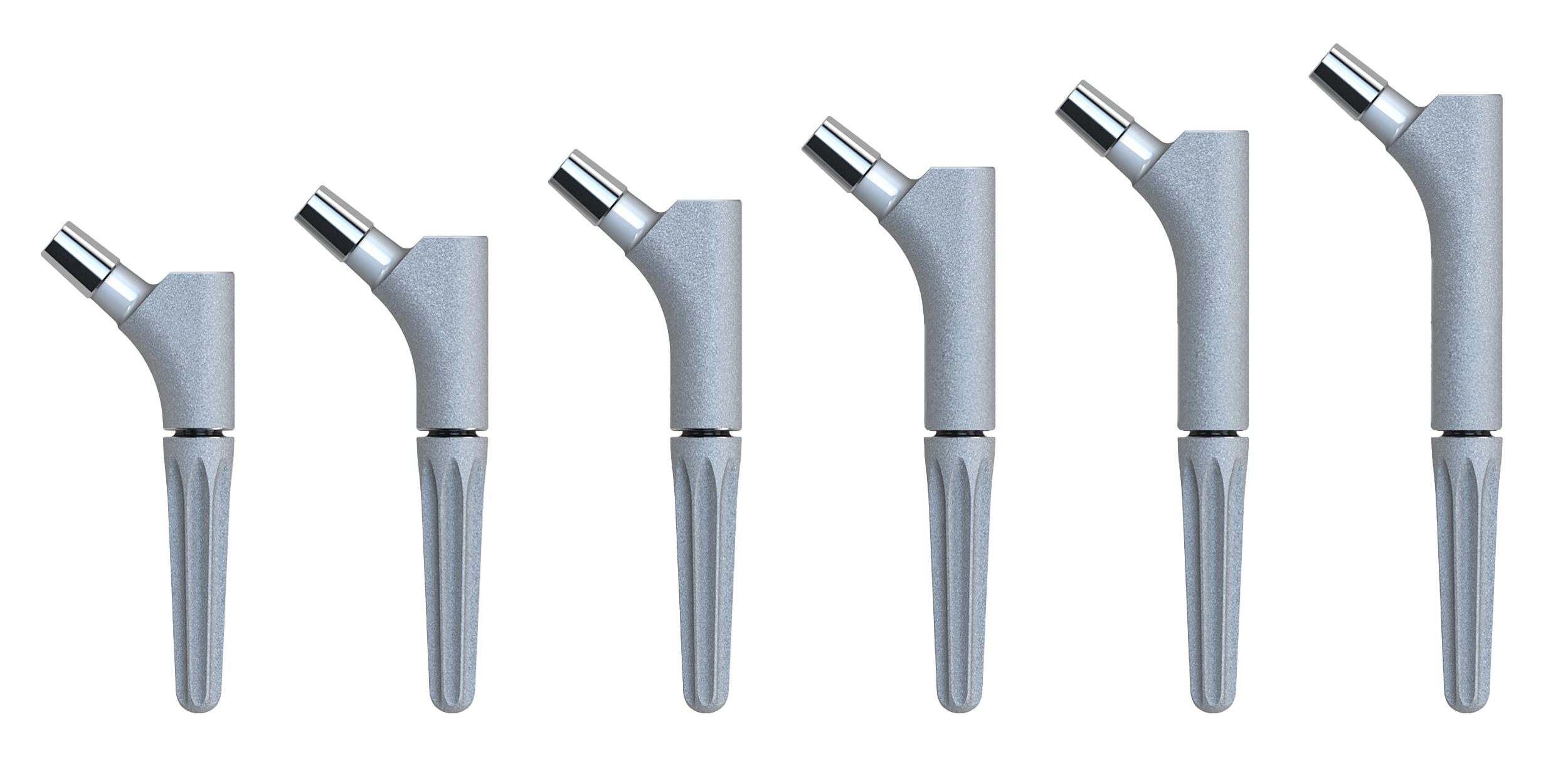
Größen & Varianten
Downloads
Für die Instrumentationsanleitungen bitten wir Sie. sich zu registrieren. Sollten Sie noch kein registrierter Benutzer sein, so können Sie Ihre Login-Daten hier anfordern. Fallberichte und Executive Summaries erhalten Sie in der Mediathek.
MRP-TITAN
Tipps & Tricks
Explantationsset
MRP-TITAN
Literatur
- Boettcher JM, Sellenschloh K, Strube A, Huber G, Morlock MM. Festigkeit der Konusverbindung modularer Revisionshüftschäfte: Einfluss der Verunreinigung der Konusverbindung und der Fügebedingung auf die Relativbewegung und Abzugskraft zwischen Schaft und Halsteil der MRP-Prothese [Strength of the taper junction of modular revision hip stems : The influence of contamination of the taper junction and the joining condition on the relative motion and pull-off force between the stem and neck part of the MRP prosthesis]. Orthopädie 2024;53(1):47-55. https://doi.org/10.1007/s00132-023-04459
- Bormann T, Kretzer JP, Jaeger S, Lohmann CH. Is taper corrosion in modular revision hip stem junctions associated with patient or implant specific factors? A retrieval analysis. J Mech Behav Biomed Mater. 2024;150:106326. https://pubmed.ncbi.nlm.nih.gov/38141361/
- Pavlović M, Bliemel C, Ketter V, Lenz J, Ruchholtz S, Eschbach D. Health-related quality of life (EQ-5D) after revision arthroplasty following periprosthetic femoral fractures Vancouver B2 and B3 in geriatric trauma patients. Arch Orthop Trauma Surg. 2024;144(5):2141-2148. https://pubmed.ncbi.nlm.nih.gov/38554206/
- Spranz D, Skrobek D, Randoll J, Kinkel S, Merle C, Walker T, Renkawitz T, Reiner T. Femoral revision in total hip arthroplasty using a cementless modular stem: clinical and radiological results with a 8-year follow-up. Arch Orthop Trauma Surg. 2024 Mar;144(3):1369-1377. https://pubmed.ncbi.nih.gov/37872437/
- Huber G, Morlock MM. Which length should the neck segment of modular revision stems have? Clin Biomech (Bristol) 2022;94:105286. https://pubmed.ncbi.nlm.nih.gov/33678413/
- Sukopp M, Taylor D, Forst R, Seehaus F. Femoral Stem Fracture in Hip Revision Arthroplasty: A Systematic Literature Review of the Real-World Evidence. Z Orthop Unfall. 2022;160(2):160-171. https://pubmed.ncbi.nlm.nih.gov/33851402/
- Krueger DR, Guenther KP, Deml MC, Perka C. Mechanical failure of 113 uncemented modular revision femoral components. Bone Joint J. 2020;102-B(5):573-579. https://pubmed.ncbi.nlm.nih.gov/32349597/
- Wirtz DC, Morlock M. Schröder R. Leitfaden Modulare Revisionsendoprothetik. Springer-Verlag Berlin-Heidelberg 2017
Hoberg M, Konrads C, Engelien J, Oschmann D, Holder M, Walcher M, Rudert M. Outcome of a modular tapered uncemented titanium femoral stem in revision hip arthroplasty. Int Orthop. 2015 Sep;39(9):1709-13. https://www.ncbi.nlm.nih.gov/pubmed/25690924 - Schmolders J, Friedrich MJ, Michel R, Strauss AC, Wimmer MD, Randau TM, Pennekamp PH, Wirtz DC, Gravius S. Validation of the Charlson comorbidity index in patients undergoing revision total hip arthroplasty. Int Orthop. 2015;39(9):1771-1777. https://pubmed.ncbi.nlm.nih.gov/26105762/
- Thorweihe HM. Revisionsendoprothetik der Hüfte – Klinische und radiologische Ergebnisse der MRP-Titanprothese in einer retrospektiven Multi-Center-Studie. Dissertation, 2014.
- Wirtz DC, Gravius S, Ascherl R, Thorweihe M, Forst R, Noeth U, Maus UM, Wimmer MD, Zeiler G, Deml MC. Uncemented femoral revision arthroplasty using a modular tapered, fluted titanium stem: 5- to 16-year results of 163 cases. Acta Orthop. 2014;85(6):562-569. https://www.ncbi.nih.gov/pmc/articles/PMC4259034/
- Langenhan R, Trobisch P, Hohendorff B, Baumann M, Probst A. Geriatrische Patienten mit proximalen periprothetischen Femurfrakturen nach Prothesenschaftwechsel. Letalität, Komplikationsrate und weiterer Lebensweg [Patients with periprosthetic femur fractures and consecutive stem replacement. Analysis of survival, complications, and quality of life]. Unfallchirurg. 2013;116(8):716-722. https://pubmed.ncbi.nlm.nih.gov/22527954/
- Wimmer MD, Randau TM, Deml MC, Ascherl R, Nöth U, Forst R, Gravius N, Wirtz D, Gravius S. Impaction grafting in the femur in cementless modular revision total hip arthroplasty: a descriptive outcome analysis of 243 cases with the MRP-TITAN revision implant. BMC Musculoskelet Disord. 2013;14:19. https://pubmed.ncbi.nlm.nih.gov/23311769
- Langenhan R, Trobisch P, Ricart P, Probst A. Aggressive surgical treatment of periprosthetic femur fractures can reduce mortality: comparison of open reduction and internal fixation versus a modular prosthesis nail. J Orthop Trauma. 2012;26(2):80-85. https://pubmed.ncbi.nlm.nih.gov/21926637/
- Efe T, Schmitt J. Analyses of prosthesis stem failures in noncemented modular hip revision prostheses. J Arthroplasty. 2011;26(4):665.e7-12. https://www.ncbi.nlm.nih.gov/pubmed/20634038
- Mumme T, Müller-Rath R, Andereya S, Wirtz DC. Uncemented femoral revision arthroplasty using the modular revision prosthesis MRP-TITAN revision stem. Oper Orthop Traumatol. 2007;19(1):56-77. https://pubmed.ncbi.nlm.nih.gov/17345027/